CE Certified Mini Diggers: The Guide to Adherence
CE Certified Mini Diggers: The Guide to Adherence
Blog Article
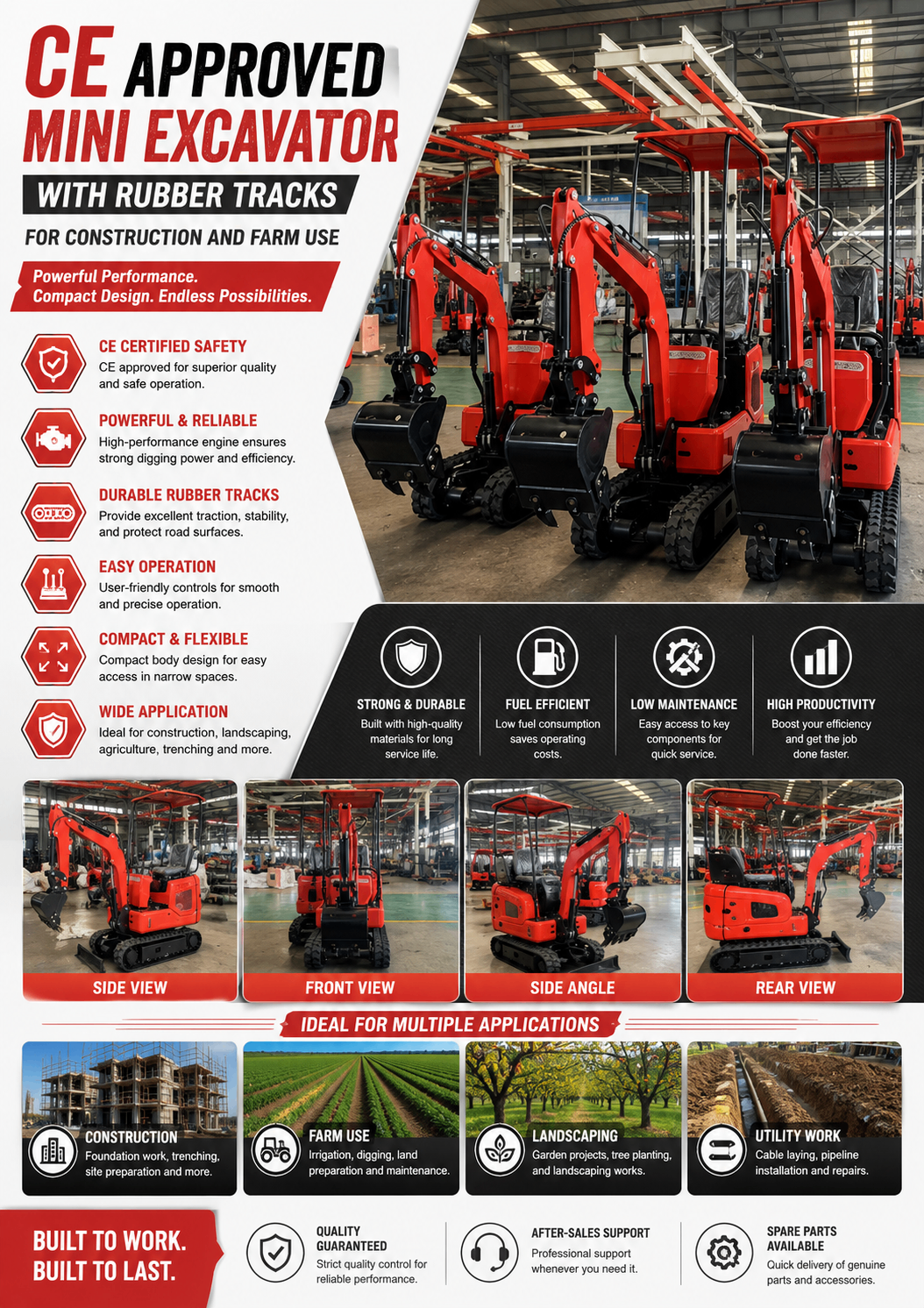
Ensuring your compact excavator meets EU certification requirements is vital for market within European markets. These overview explains the important aspects of CE accreditation for small diggers, such as directives related to operator protection, construction equipment testing, and records. Grasping the specifications allows operators to safely use their machinery and circumvent serious fines.
Specialized Track Mini Machines: Outstanding Pull for Challenging Ground
Mini diggers equipped with steel tracks are revolutionizing how contractors work with projects in uneven situations. Unlike traditional tire-equipped models, these flexible machines offer exceptional pull on loose surfaces like sand, ice, and inclined grades. This greater balance allows operators to execute projects effectively and quickly, minimizing downtime and increasing performance. The flexible nature of composite tracks Mini excavator for farm use also reduces ground impact, protecting delicate surfaces and minimizing environmental impact.
Small Excavators: Significant Output in Tight Work Locations
These capable reduced-size excavators provide a considerable answer for jobs where conventional equipment easily work. Their reduced size permits access to challenging areas, such basement systems or within existing buildings. Despite their scale, they possess substantial digging power and accuracy, making them suitable for a varied range of building applications. Ultimately, compact excavators embody a efficient tool for builders facing the problems of confined job-sites.
Mini Diggers for Properties: Adaptability and Efficiency in Crop Tasks
Modern ranching operations often require machinery that can handle a variety of demanding jobs. Small machines are quickly becoming invaluable assets for farmers , offering exceptional flexibility and productivity across a broad array of agricultural tasks . From trenching for irrigation networks and runoff to relocating ground for constructing barriers or levels , these devices provide a powerful solution. They furthermore excel at clearing land for seeding , grading land, and handling materials with convenience. Their small size allows them to work in tight areas that larger equipment simply cannot access .
- Trenching for Irrigation
- Relocating Soil
- Removing Land for Planting
Determining the Appropriate Mini Excavator in Construction vs. Agricultural Tasks
When evaluating a mini excavator , it's essential to appreciate the key distinctions between construction projects and farm tasks . Building sites often necessitate more power , accuracy , and the capacity to operate in small spaces . Therefore , a robust model with a broad selection of implements might be best . Conversely , farms frequently involve reduced digging depths , routine landscape leveling , and the necessity for small equipment to navigate open areas. Ultimately , thorough assessment of the planned assignments is essential for achieving the right choice .
- Evaluate trenching depths .
- Determine the area limitations .
- Evaluate the necessary attachments .
- Factor in transportation issues.
{CE Certification & Mini Diggers : What Users Require to Understand
Ensuring your {mini excavator is adheres to relevant European regulations is crucial, and that's where {CE certification comes with. This symbol demonstrates that the equipment has been assessed and meets safety requirements, allowing unrestricted sale within the EEA . {For purchasers of these machines, understanding CE marking is vital . It isn't simply about having a label on the excavator ; it represents a evaluation of manufacturing and functionality.
- Check the visibility of the CE identification.
- Review the DoC – this details the requirements the excavator meets.
- Bear in mind that CE marking is the manufacturer’s responsibility – even owners must be cognizant of its significance.